Ana içeriğe atla

Picture

 The relationship between good and evil is a complex one that has been debated by philosophers, theologians, and moral thinkers throughout history. These concepts are fundamental to the human experience and help us to understand the world and make decisions about how to live within it.

In visual terms, the concepts of good and evil are often represented as polar opposites. Good is typically associated with light, positive, and affirmative. Evil, on the other hand, is typically associated with darkness, negative, and negative.

Here are some visual examples that illustrate the relationship between good and evil:

  • A flashlight and a dark room: The flashlight represents good and light, while the dark room represents evil and darkness.

  • A flower and a spider web: The flower represents good and beauty, while the spider web represents evil and danger.

  • A rose and a thorn: The rose represents good and love, while the thorn represents evil and pain.

These visual representations help to emphasize the contrast between good and evil. Good is associated with light, positive, and affirmative, while evil is associated with darkness, negative, and negative.

Here are some more complex visual examples that illustrate the relationship between good and evil:

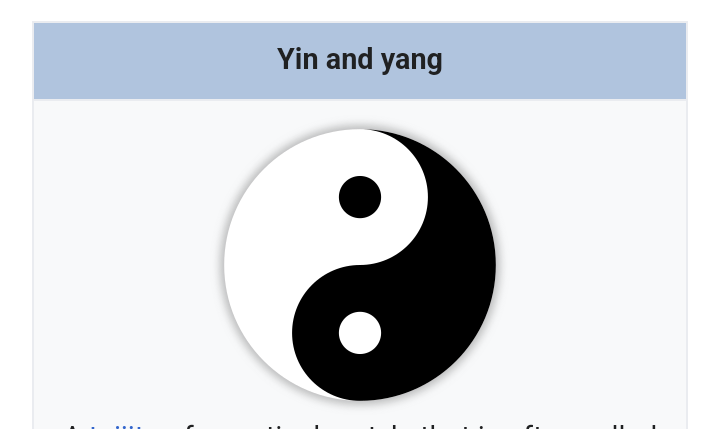
  • A yin and yang symbol: The yin and yang symbol represents the constant balance of good and evil in the universe.

  • A scale: The scale can represent the equality of good and evil.

  • A fork in the road: The fork in the road represents a choice between good and evil.

These visual representations take a more complex look at the relationship between good and evil. Good and evil are not always black and white. Sometimes there can be a balance between good and evil. Sometimes it is necessary to make a choice between good and evil.

In conclusion, the relationship between good and evil is complex and can be represented in different ways. Polar opposites are a common way to emphasize the contrast between good and evil. However, there are also visual representations that take a more complex look at the relationship between good and evil.

Yorumlar

Yayınlar

Anaximander: The Ancient Greek Philosopher

 " Anaximander: The Ancient Greek Philosopher Unveiling the Secrets of the Universe "  Anaximander is one of the ancient Greek philosophers, known as a member of the Milesian School and a student of Thales. His thoughts primarily revolve around the fundamental principles of the universe.  Anaximander advocated the existence of an unlimited, indefinite principle named " apeiron ." Additionally, he is recognized for his ideas on evolution. Among the prominent ancient Greek philosophers,  Anaximander stands out as a member of the Milesian School, making noteworthy contributions to the understanding of the fundamental principles of the universe. He posited the existence of a principle named "apeiron" to explain the origin of the universe, referring to an unlimited, indefinite, and boundless potential principle.  According to him, this apeiron is a fundamental element for all existence and the main principle of the universe. Beyond apeiron, Anaximander is known...

Hobbies: Activities

 " Hobbies : Activities conducted based on personal interests that bring enjoyment, such as painting, gardening, and reading books. Fun Activities : Represents enjoyable and pleasurable activities, including games, dancing, and traveling. Creative Time Spending: Involves spending time on activities that stimulate creativity, such as painting, writing, and crafts. Stress Reduction: Refers to activities aimed at alleviating mental or emotional tension, including methods like meditation, yoga, and nature walks. Hobby Enthusiasts : Describes individuals passionate about a specific interest, like photography enthusiasts or bookworm hobbyists. Efficient Time Management: The skill of using time effectively, covering aspects like dedicating time to a hobby or optimizing learning processes. Personal Development: The process of enhancing one's skills, abilities, and knowledge, including activities like reading books, receiving education, and acquiring new skills. Enjoyable Activities:...

Analyse der Hybridkriegsführung im Rahmen des Völkerrechts

 Analyse der Hybridkriegsführung im Rahmen des Völkerrechts Das traditionelle Kriegsverständnis umfasste offene militärische Konflikte zwischen Staaten. Doch in der modernen Welt verändert sich die Art der Kriegsführung zunehmend. Kriege werden nicht mehr nur mit Panzern und Gewehren geführt, sondern auch durch Cyberangriffe, Desinformationskampagnen, wirtschaftlichen Druck und den Einsatz von Stellvertretergruppen. Doch wie wird diese neue Form der Kriegsführung im Völkerrecht bewertet? Definition und Elemente der Hybridkriegsführung Hybridkrieg ist die Kombination von konventioneller militärischer Gewalt mit unkonventionellen Methoden. Zu dieser Strategie gehören: Militärische Operationen, Cyberangriffe, Desinformationskampagnen, Wirtschaftliche Sanktionen, Einsatz von Stellvertretergruppen, Terrorismus und asymmetrische Kriegstechniken. Hybridkrieg zielt darauf ab, gegnerische Staaten zu schwächen, ohne offiziell den Krieg zu erklären. Staaten nutzen diese Methoden, um ihren Fei...